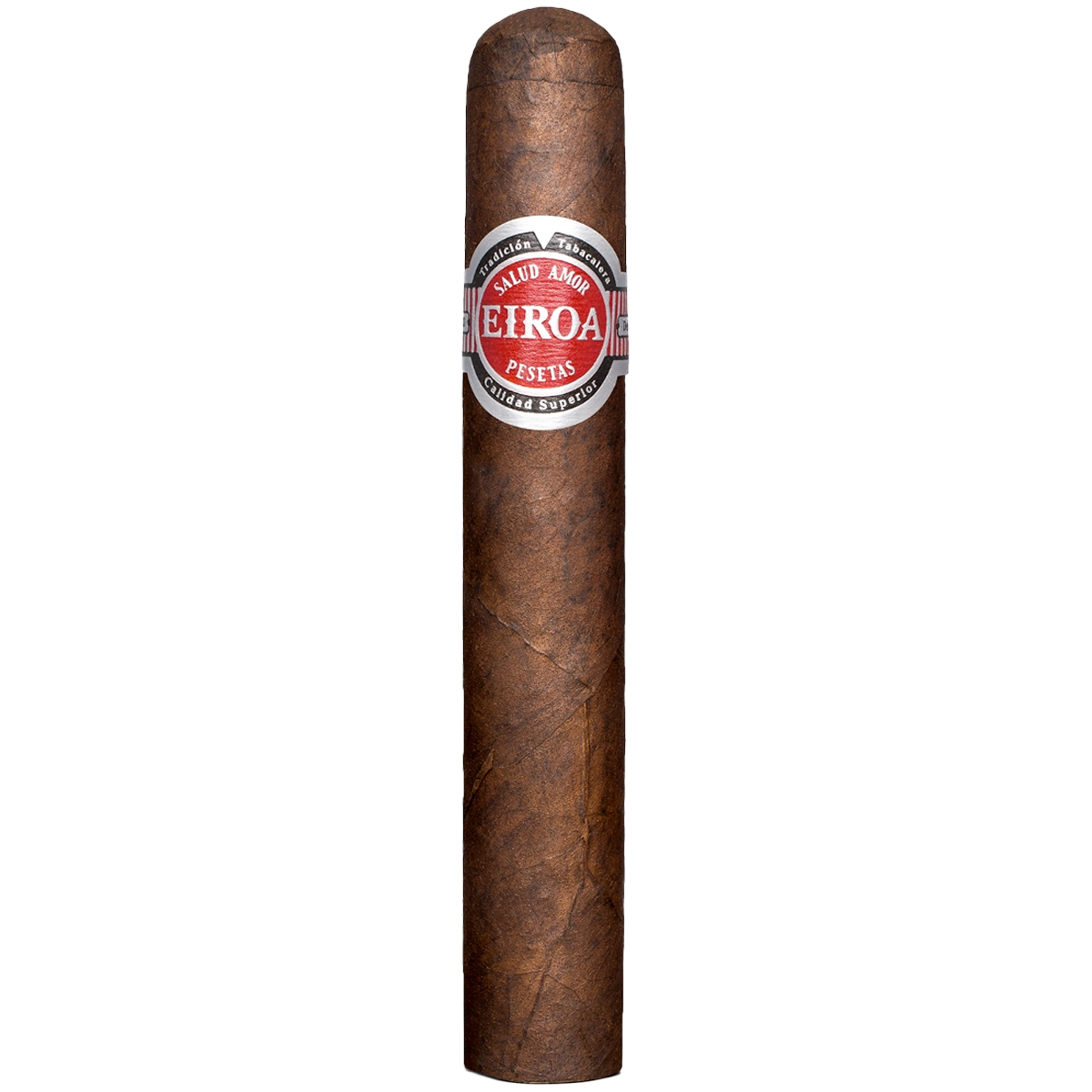
Eiroa
A Honduran tobacco legacy rooted in the Eiroa family’s Jamastrán fields
- Made in
- Honduras
- Lines here
- 2
Shop this brandBoxes from $135
The house
The story of Eiroa
The Eiroa family’s tobacco history began in Cuba, where Generoso Eiroa had grown tobacco since the 1900s. After the Cuban Revolution and the nationalization of the plantations, his widow and three sons left Cuba and settled in Tampa, Florida.
Generoso’s son Julio Eiroa participated in the Bay of Pigs invasion attempt. In 1963, tobacco dealer Angel Oliva sent him to Honduras, where a government-sponsored cultivation project allowed Julio to lay the foundations of the family’s tobacco plantations. After his first year with the Oliva family, he became an independent farmer and purchased government tobacco farms over successive years.
By 1972, partnerships with Bering Cigars and US Tobacco had made Julio the world’s largest Candela tobacco farmer. He founded Caribe Imported Cigars in Miami in 1987. The Eiroa family acquired Camacho Cigars in 1995, and the launch of Camacho Corojo helped make the family and its ventures well known in the United States cigar industry by the early 2000s.
In 2008, Camacho and its Rancho Jamastran factory in Danlí, Honduras, were sold to the Oettinger Davidoff Group. The Eiroa family retained ownership of its Honduran tobacco fields.
Milestones
Moments that made the house
- 1963
Arrival in Honduras
Julio Eiroa traveled to Honduras for Angel Oliva and helped establish the family’s tobacco plantations through a government-sponsored cultivation project.
- 1972
Candela leadership
Julio Eiroa had become the world’s largest Candela tobacco farmer through partnerships including Bering Cigars and US Tobacco.
- 1987
Caribe Imported Cigars
Julio Eiroa founded Caribe Imported Cigars in Miami, Florida.
- 1995
Camacho acquired
The Eiroa family acquired Camacho Cigars five years after founder Simon Camacho’s death.
- 2008
Camacho sold
Camacho and its Rancho Jamastran factory in Danlí were sold to the Oettinger Davidoff Group, while the Eiroas retained their Honduran tobacco fields.
Details
Things most people don't know
- Cuban beginnings
- Generoso Eiroa had grown tobacco in Cuba since the 1900s.
- Honduran foundations
- Julio Eiroa went to Honduras in 1963 on behalf of tobacco dealer Angel Oliva.
- Candela scale
- By 1972, Julio Eiroa had become the world’s largest Candela tobacco farmer.
- Fields retained
- The family retained its Honduran tobacco fields when Camacho was sold in 2008.
In the humidor
Eiroa up close
Shop this brand