Montecristo
A Cuban-born cigar name inspired by Alexandre Dumas’ celebrated novel.
- Founded
- 1935
- Founded by
- Alonso Menéndez
- Family
- Produced independently in Cuba by Habanos S.A. and in the Dominican Republic by Altadis, a subsidiary of Imperial Brands
- Made in
- Dominican Republic · Nicaragua
- Lines here
- 12
Shop this brandBoxes from $97
The house
The story of Montecristo
In July 1935, Alonso Menéndez purchased the Particulares Factory and immediately created Montecristo. Its name was inspired by Alexandre Dumas’ The Count of Monte Cristo, reportedly a popular choice when factory lectors read to cigar rollers. British distributor John Hunter Morris and Elkan Co. Ltd. designed the emblem of six swords arranged around a fleur-de-lis.
Menéndez and a partner established Menéndez, García y Cía. in July 1936. As Montecristo grew, the firm bought the struggling H. Upmann Factory in 1937 and transferred production there. John Hunter Morris and Elkan remained Montecristo’s sole British distributor; its 1963 merger with J. Frankau created Hunters & Frankau, now the United Kingdom’s sole importer and distributor of Cuban cigars.
After the Cuban Revolution, Menéndez and García fled, and on September 15, 1960, the Cuban government nationalized the brand, factory and assets. The partners re-established the name in the Canary Islands but later withdrew amid trademark disputes with Cubatabaco. In the mid-1970s, their operation moved to La Romana in the Dominican Republic for the United States market; it is now owned by Altadis S.A.
In Cuba, José Manuel González was promoted from top-grade torcedor to floor manager after Menéndez and García departed. Five sizes—the A, Especial No. 1, Especial No. 2, Joyita and Petit Tubo—were added during the 1970s and 1980s. Montecristo is now produced separately and independently by Habanos S.A. in Cuba and by Altadis in La Romana.
Milestones
Moments that made the house
- 1935
Montecristo created
Alonso Menéndez bought the Particulares Factory in July and immediately created Montecristo.
- 1936
Menéndez, García y Cía. formed
Menéndez founded the new firm with a partner in July.
- 1937
Move to H. Upmann
The firm purchased the H. Upmann Factory and transferred Montecristo production there.
- 1960
Nationalization in Cuba
On September 15, the Cuban government nationalized the brand, factory and assets.
- 2004
Edmundo introduced
The large robusto-sized Edmundo joined the Cuban range, named for Edmond Dantès.
- 2009
Open line launched
A lighter-bodied line with sports-inspired vitola names debuted at the XI Festival del Habano.
- 2011
First Gran Reserva
Habanos S.A. announced the first Gran Reserva for Montecristo at the XIII Festival del Habano.
- 2015
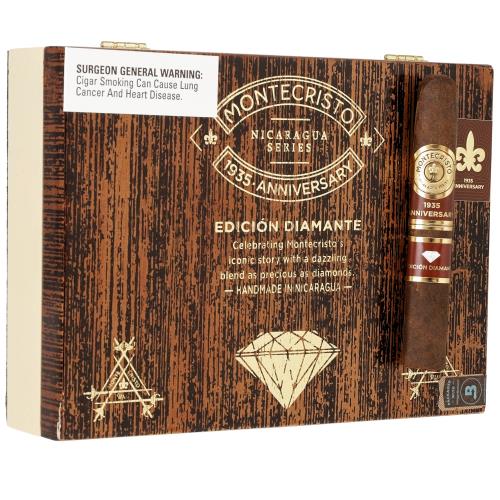
80th anniversary marked
Habanos S.A. revealed the Montecristo 80 Aniversario during the Festival del Habano.
Craft
How they make them
The sources describe selected Cuban releases made with Vuelta Abajo tobacco and extended ageing. The Montecristo No. 4 Reserva Cosecha 2002 used tobacco from the 2002 crop aged for at least five years before rolling. Montecristo’s first Gran Reserva was likewise made with Vuelta Abajo tobacco aged for at least five years. Habanos S.A. also regularly selects Montecristo for Edición Limitada releases using darker vintage wrappers.
Details
Things most people don't know
- Literary origin
- The name was inspired by The Count of Monte Cristo, reportedly read aloud to rollers by the factory lector.
- Emblem
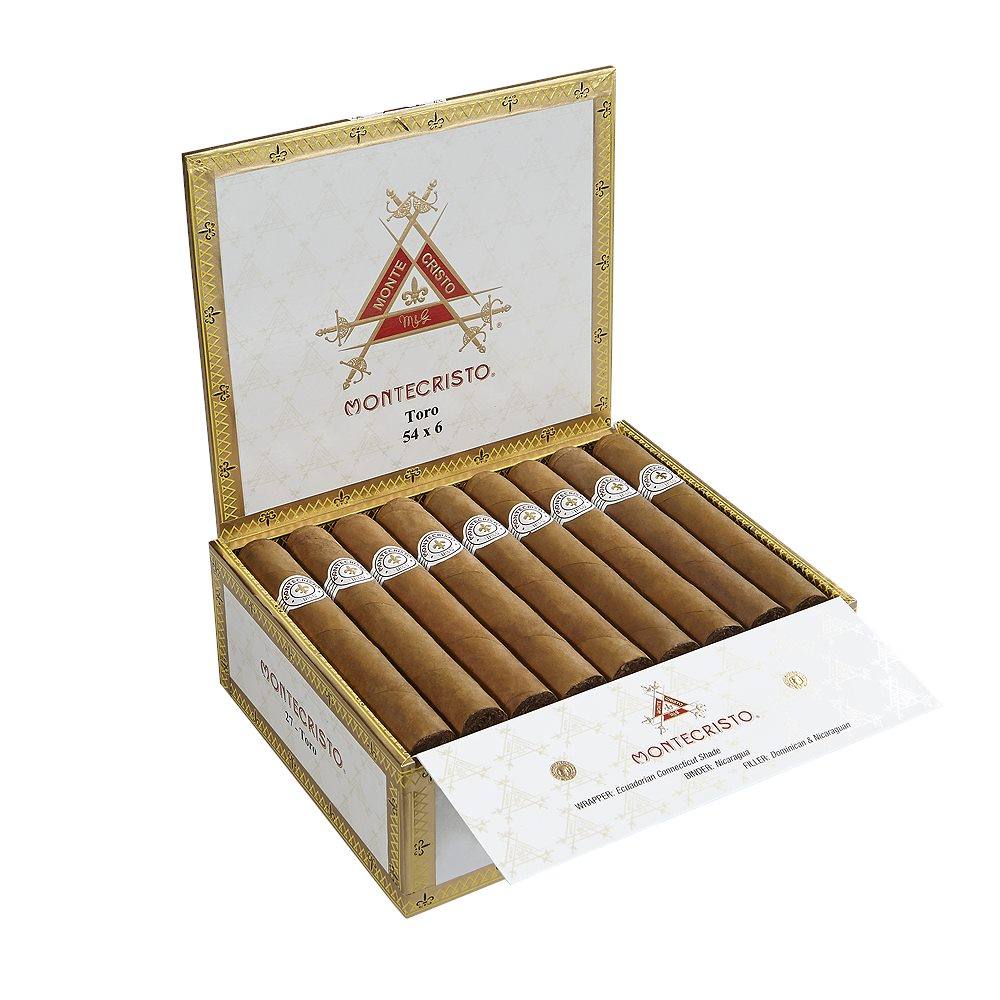
- The logo consists of a triangle of six swords surrounding a fleur-de-lis.
- Cuban sales
- Montecristo accounts for roughly one-quarter of Habanos S.A.’s worldwide cigar sales.
- Che Guevara’s choice
- The Montecristo No. 4 was the preferred cigar of Ernesto “Che” Guevara.
- Numbered reserva
- Only 5,000 numbered black lacquered cases of the Montecristo No. 4 Reserva Cosecha 2002 were made available.
- Open name
- The Open line was originally planned as Sport, but EU restrictions on sports imagery in tobacco marketing prompted the change.
In the humidor
Montecristo up close




Shop this brand